

What to Expect During Stem Cell Transplant Recovery Week by Week
Stem cell transplant recovery week by week: engraftment, the first 100 days, common side effects, infection prevention, returning to work and late effects.
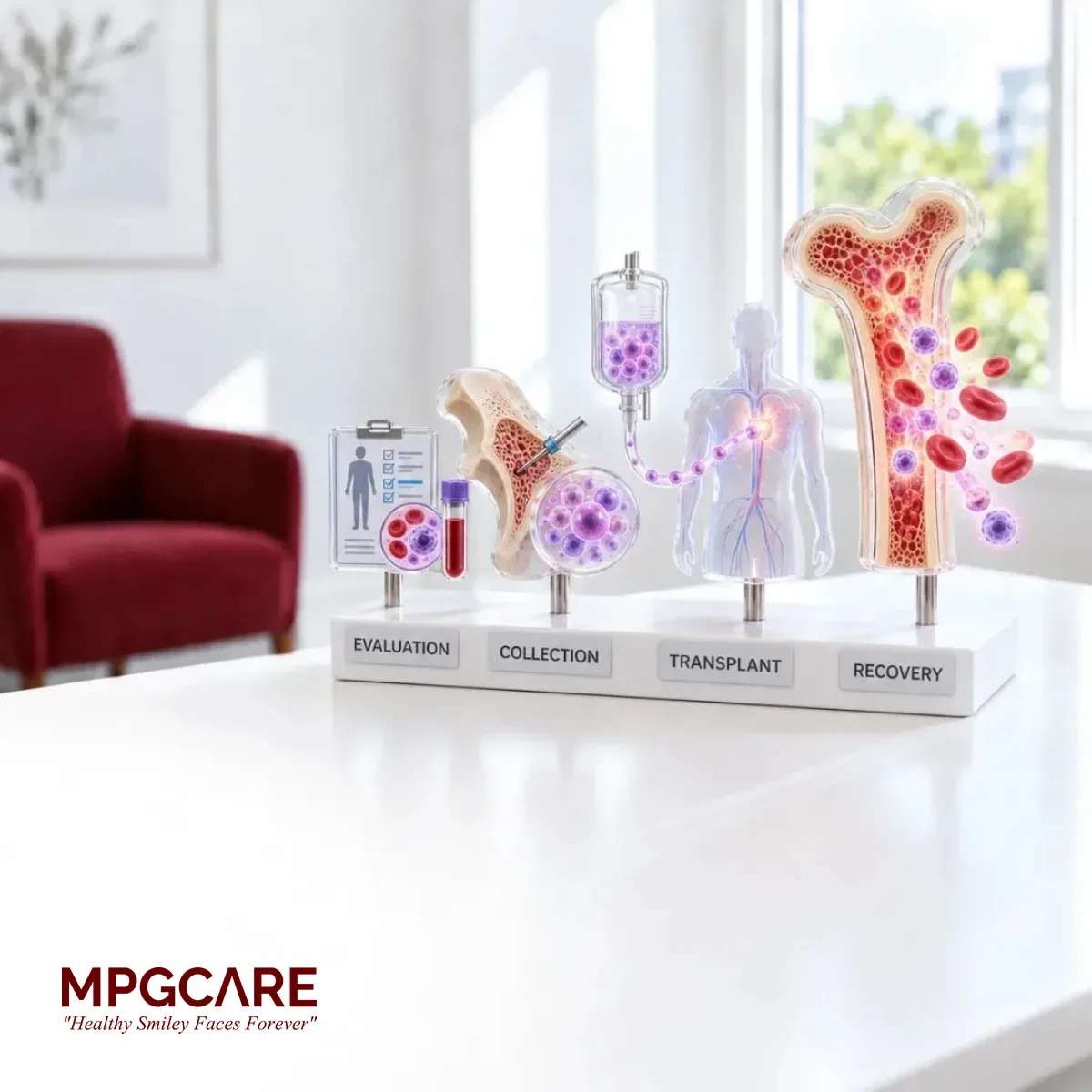
The day of the infusion often feels like the finish line. In reality, it is the start of stem cell transplant recovery, a period that unfolds in stages over weeks and months.
Many of the patients our coordinators support say the hardest part was not knowing what came next. Knowing what each stage usually looks like makes the side effects, the waiting and the rules much easier to accept.
This guide walks through bone marrow transplant recovery week by week, from the first days after the infusion to long-term follow-up. For an overview of the treatment itself, see our main guide, Stem Cell Therapy Explained and How the Treatment Is Applied Step by Step.
Every recovery is different. Autologous transplants (your own cells) are usually faster to recover from than allogeneic transplants (donor cells). Our article on autologous and allogeneic stem cell transplants explains why.
The First Two Weeks After The Infusion
The first two weeks are usually spent in hospital, in a protected room. Blood counts drop to their lowest point because the conditioning treatment has emptied the bone marrow and the new cells have not started working yet.
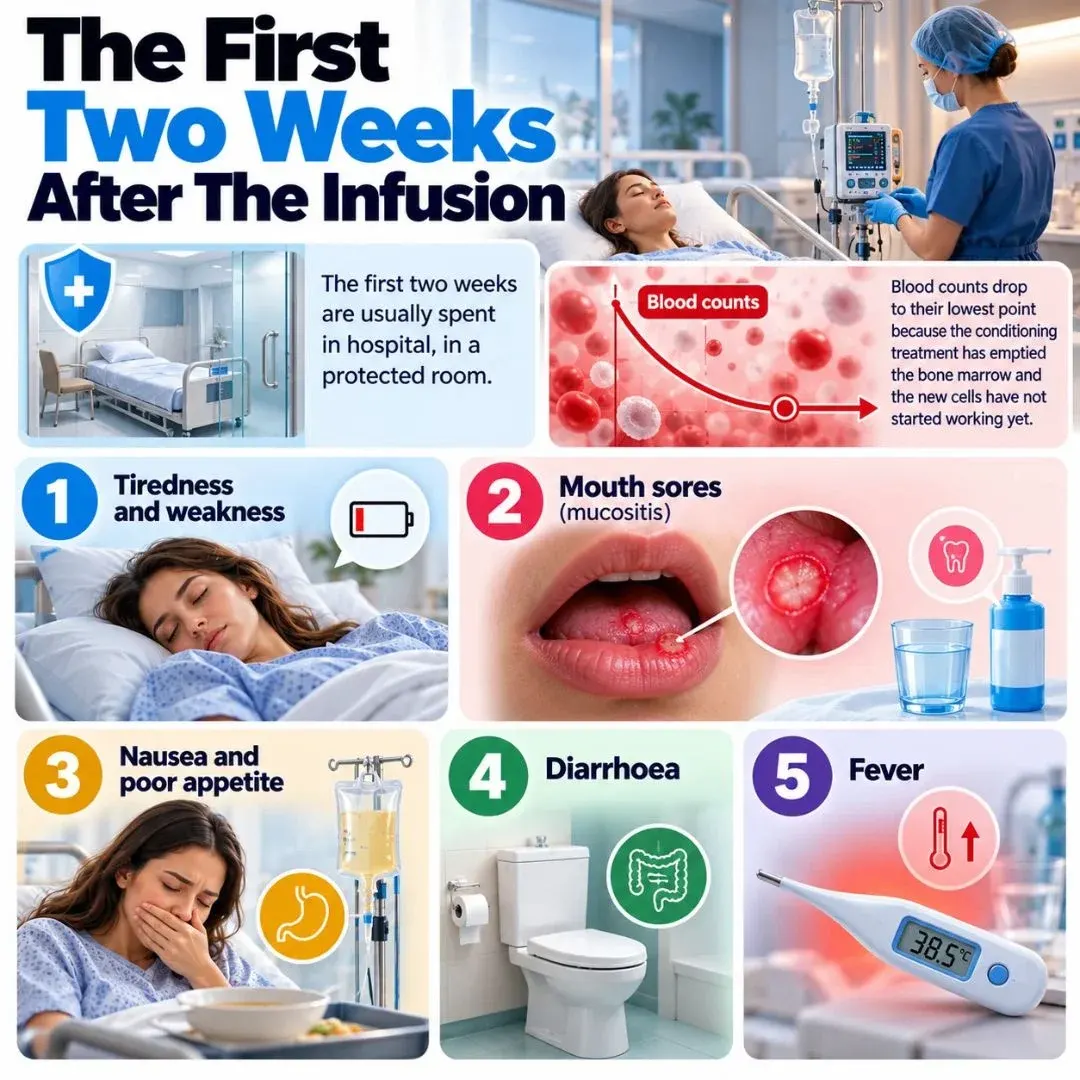
During this time, the most common experiences are:
- Tiredness and weakness. Most patients sleep a lot and feel too weak for much activity.
- Mouth sores. Painful sores in the mouth and throat (mucositis) can make eating and swallowing difficult. Pain relief and mouth care are given regularly.
- Nausea and poor appetite. Some patients need nutrition through a drip for a while.
- Diarrhoea. This is common after high-dose chemotherapy.
- Fever. Even a mild fever is treated urgently with antibiotics, because the body has very few white cells to fight infection.
Blood and platelet transfusions are often needed in this period. Nurses check temperature, blood pressure and blood counts every day.
It can be helpful to know that this is usually the lowest point. For most patients, things start improving once engraftment begins.
When Engraftment Happens And How Doctors Know
Engraftment means the new stem cells have settled in the bone marrow and started making blood cells. It usually happens between two and four weeks after the infusion.
Doctors watch daily blood counts, especially the neutrophils, a type of white blood cell that fights infection. Engraftment is generally confirmed when the neutrophil count stays above a set level for three days in a row. Platelets usually recover a little later, once they stay stable without transfusions.
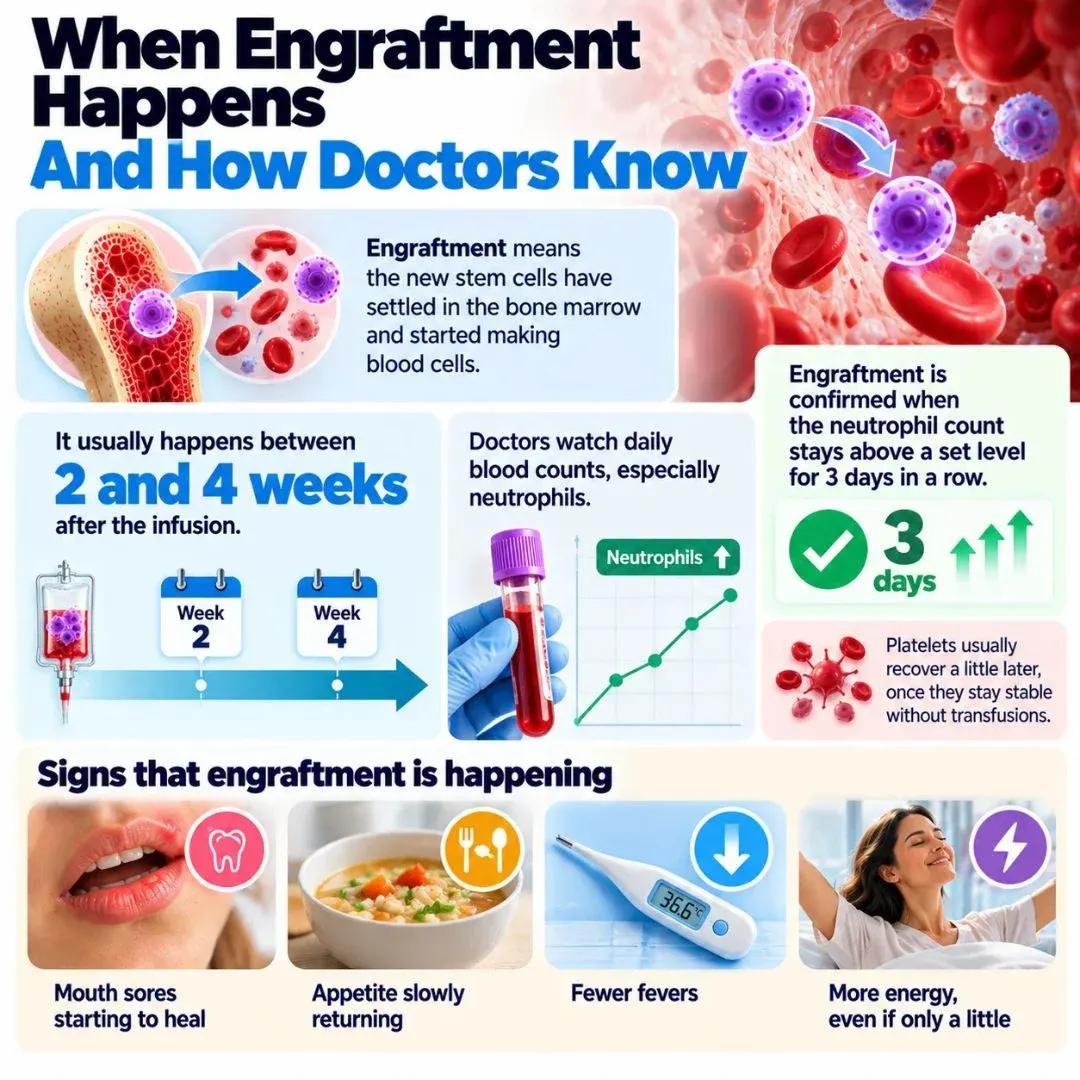
Signs that engraftment is happening often include:
- Mouth sores starting to heal
- Appetite slowly returning
- Fewer fevers
- More energy, even if only a little
After a donor transplant, engraftment is also when the team starts watching more closely for early signs of graft versus host disease (GVHD), such as a skin rash.
Going Home And The First 100 Days
Most patients leave hospital once their blood counts are stable, they can eat and drink well and there are no active infections. For autologous transplants, this is often around two to three weeks after the infusion. For allogeneic transplants, it is often around four to six weeks.
Leaving hospital does not mean recovery is complete. The first 100 days after a transplant are the most closely monitored period, especially after a donor transplant.
| Period | What usually happens |
|---|---|
| Weeks 1–2 | Lowest blood counts, hospital stay |
| Weeks 2–4 | Engraftment, side effects start easing |
| Weeks 4–8 | Discharge, frequent check-ups |
| Up to day 100 | Close monitoring, medicines adjusted |
| Months 3–12 | Gradual return of energy and immunity |
In the first 100 days, you may visit the hospital once or several times a week. Blood tests, medicine adjustments and GVHD checks are routine. This is why patients travelling for treatment usually stay near the transplant centre during this period. Our guide on planning your stay in Turkey covers the practical side.
If you would like to know whether this treatment is suitable for you, you can share your medical reports with our patient coordinators, and they will arrange an evaluation with a specialist at one of our partner hospitals.
Common Side Effects And How They Are Managed
The most common stem cell transplant side effects are:
| Side effect | How it is usually managed |
|---|---|
| Fatigue | Gradual activity, rest, treating anaemia |
| Mouth sores | Pain relief, mouth rinses, soft foods |
| Nausea and poor appetite | Anti-sickness medicine, small frequent meals |
| Diarrhoea | Fluids, diet changes, tests for infection |
| Hair loss | Usually grows back within months |
| Infections | Preventive medicines, quick treatment of fever |
| GVHD (donor transplants) | Close monitoring, immune-calming medicines |
Some side effects come from the conditioning treatment and fade in the first weeks. Others, like fatigue, can last for months.
Emotional effects are common too. Low mood, anxiety and frustration at slow progress are normal parts of recovery. Talking with the team, family or a psychologist can help.
Preventing Infection At Home
The immune system takes months to rebuild, and longer after a donor transplant. Infection prevention is the most important part of daily life in early recovery.
Common precautions include:
- Hand washing. For you, your caregiver and anyone entering your home.
- Avoiding crowds. Especially public transport, shopping centres and waiting rooms during busy times.
- Avoiding sick people. Including those with colds, flu or stomach bugs.
- Food safety. Eating well-cooked foods and avoiding raw meat, raw fish, unpasteurised dairy and unwashed fruit.
- Pets and gardening. Avoiding cleaning litter trays or cages, and working with soil.
- Taking a temperature daily. Calling the team at once if it rises above the level they set.
These rules are usually relaxed step by step as blood counts and immunity recover. Your team will tell you when each one can be lifted.
Returning To Work, Travel And Exercise
There is no single timeline, but some general patterns are common.
Work and school. Many people return part-time around three to six months after an autologous transplant. After an allogeneic transplant, it is often six to twelve months. Jobs with lots of public contact may take longer.
Travel. Flying home is usually possible once the team confirms that blood counts and overall health are stable. Long trips and crowded places are generally avoided in the first months.
Exercise. Gentle walking usually starts in hospital and increases gradually at home. Swimming pools and contact sports are usually avoided until immunity recovers and any central line has been removed.
Driving. Usually possible once strength, concentration and reaction time are back, and medicines do not cause drowsiness.
The best guide is your own energy level and your team's advice. Pushing too hard too early can slow recovery.
Long-Term Follow-Up And Late Effects
Life after a stem cell transplant includes long-term check-ups, sometimes for many years. Some health problems can appear months or years later, known as late effects.
International guidelines updated in 2023 recommend that transplant survivors be offered a full vaccination programme, with inactivated vaccines usually starting three to six months after the transplant. This is because the new immune system needs to learn its defences again.
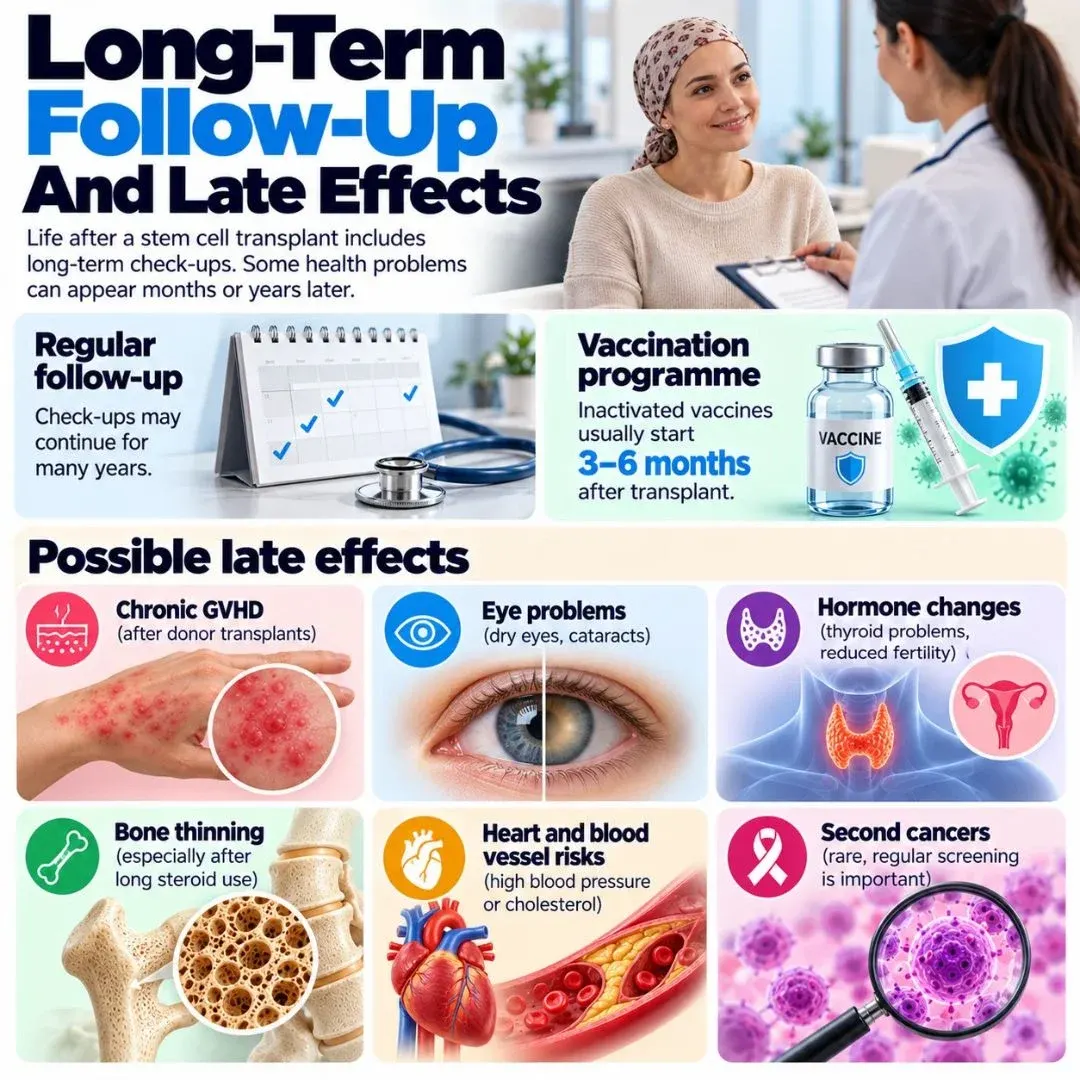
Possible late effects include:
- Chronic GVHD, after donor transplants
- Eye problems, such as dry eyes and cataracts
- Hormone changes, including thyroid problems and reduced fertility
- Bone thinning, especially after long steroid use
- Heart and blood vessel risks, such as high blood pressure or cholesterol
- Second cancers, which are rare but require regular screening
Long-term screening may include yearly blood tests, eye examinations, bone density scans, heart risk checks and cancer screening. Your hematologist will tailor the schedule to your treatment and health.
More information on how blood diseases are evaluated is available on our hematology and internal medicine page.
Frequently Asked Questions
How long does stem cell transplant recovery take?
Most patients leave hospital within a few weeks. Full recovery of energy and immunity often takes several months after an autologous transplant and six to twelve months or longer after an allogeneic transplant.
What are the most common stem cell transplant side effects?
Fatigue, mouth sores, nausea, diarrhoea, hair loss and infections are the most common. After a donor transplant, graft versus host disease is also a key risk.
When will my hair grow back?
Hair usually starts growing back within a few months after the transplant. Its texture or colour may be slightly different at first.
When can I go back to work?
Often three to six months after an autologous transplant and six to twelve months after an allogeneic transplant. It depends on your recovery and the type of work.
Do I need to repeat my vaccinations?
Yes, in most cases. Inactivated vaccines usually start three to six months after the transplant, following your team's schedule.
How much does a stem cell transplant cost?
The cost varies depending on the condition, the type of treatment and the length of stay. For personalised information, you can contact our patient coordinator.
Recovery after a stem cell transplant takes patience, but knowing what each stage usually looks like makes the road ahead clearer. Our article on how a bone marrow transplant is performed in Turkey explains the steps that come before recovery. If you would like to know whether this treatment is suitable for you, you can share your medical reports with our patient coordinators, and they will arrange an evaluation with a specialist at one of our partner hospitals. You can reach us by phone or WhatsApp at +90 850 259 5553.
Medical disclaimer: This article is for general information only. It does not replace a medical examination, diagnosis or treatment plan by a qualified doctor.
References
- International Recommendations for Screening and Preventative Practices for Long-Term Survivors of Transplantation and Cellular Therapy, a 2023 Update.
- Majhail NS, Rizzo JD, et al. Recommended Screening and Preventive Practices for Long-Term Survivors after Hematopoietic Cell Transplantation.
- NMDP. Long-term screening after hematopoietic cell transplant.
- National Cancer Institute. Stem Cell Transplants in Cancer Treatment.