

Autologous and Allogeneic Stem Cell Transplants and Which One Your Doctor May Recommend
Autologous vs allogeneic stem cell transplant explained: donor matching, which diseases each treats, recovery, GVHD risk and how to read survival figures.
When a hematologist recommends a stem cell transplant, the next sentence usually contains one of two words: autologous or allogeneic. To many families, they sound almost the same. In practice, they lead to very different treatment plans.
Our patient coordinators often see patients arrive with reports that mention one type, while they have read online only about the other. This guide explains the difference between an autologous stem cell transplant and an allogeneic stem cell transplant, and why your doctor may recommend one over the other. For the bigger picture, see our main guide, Stem Cell Therapy Explained and How the Treatment Is Applied Step by Step.
What an Autologous Transplant Means
In an autologous stem cell transplant, the cells come from you. "Auto" means self.
Your stem cells are collected from your blood, frozen and stored. You then receive high-dose chemotherapy that would otherwise damage your bone marrow permanently. Afterwards, your own cells are returned to rebuild the marrow.
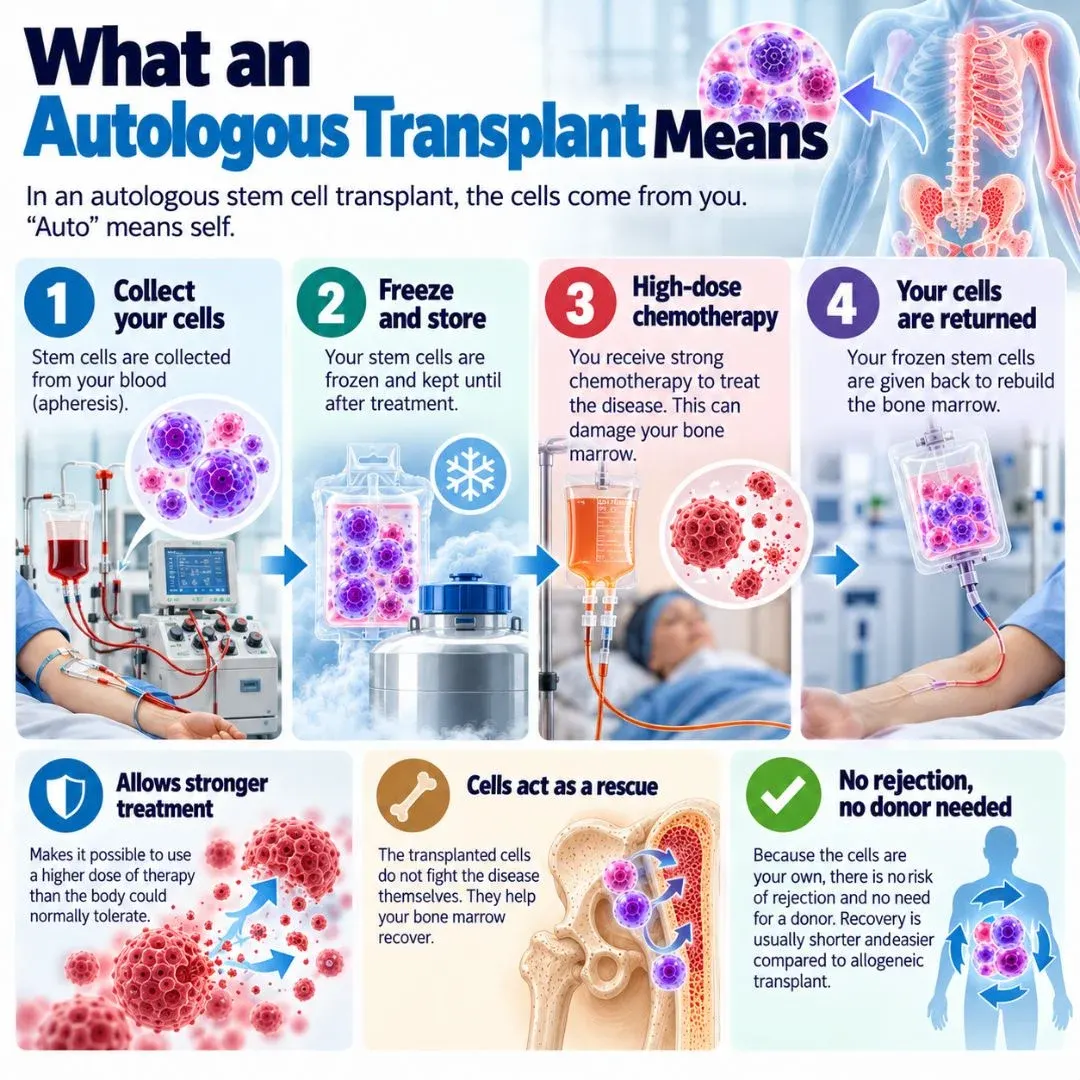
The main purpose is to allow a stronger dose of treatment than the body could normally tolerate. The transplanted cells do not fight the disease themselves. They act as a rescue for the bone marrow.
Because the cells are your own, there is no risk of rejection and no need for a donor. This makes an autologous bone marrow transplant shorter and usually easier to recover from.
What an Allogeneic Transplant Means
In an allogeneic stem cell transplant, the cells come from another person. "Allo" means other.
The donor's cells replace your blood-forming system completely. Your blood type can even change to the donor's blood type over time.
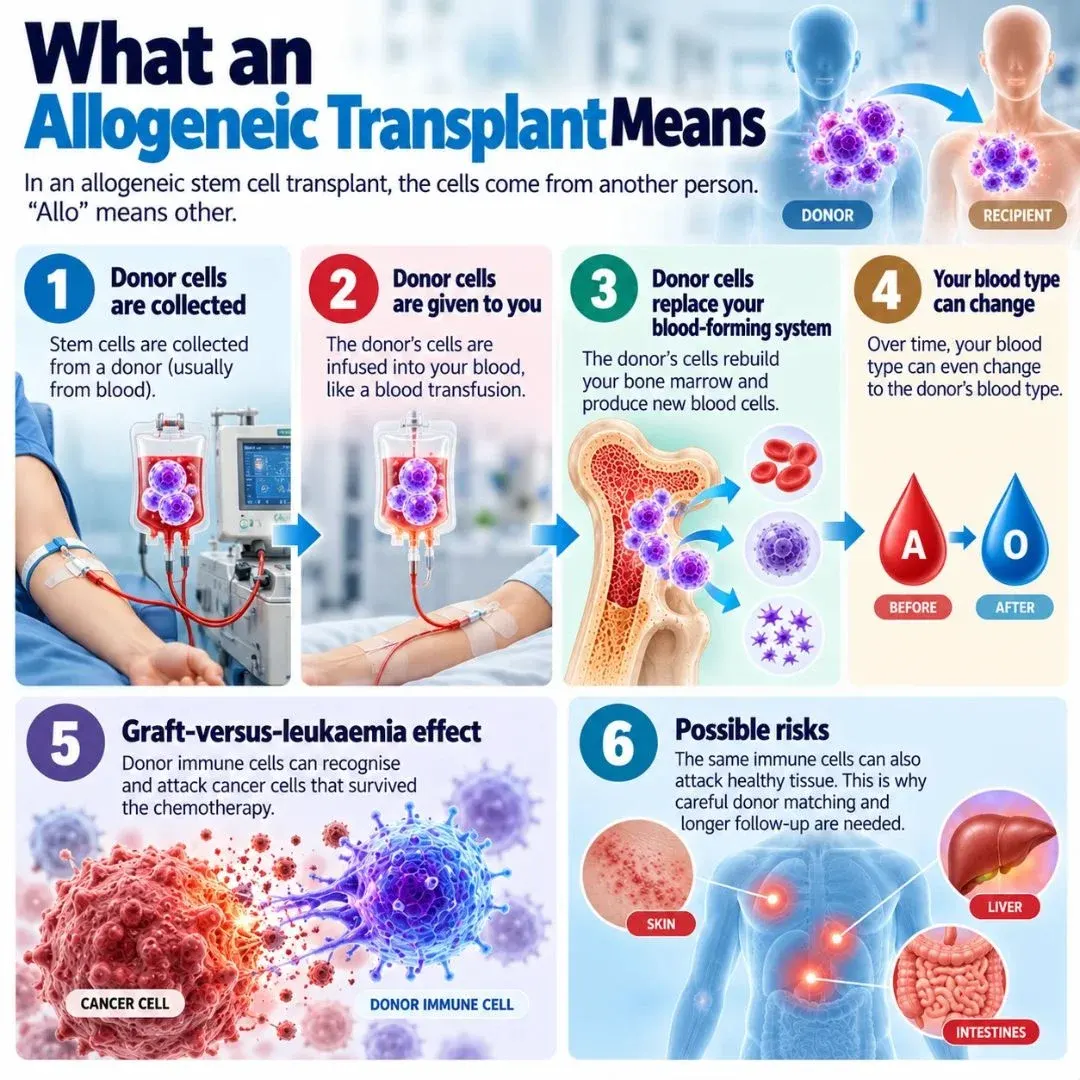
The donor's immune cells bring an important extra effect. They can recognise and attack cancer cells that survived the chemotherapy. This is called the graft-versus-leukaemia effect, and it is often the main reason doctors choose an allogeneic bone marrow transplant.
The same immune cells, however, can also attack healthy tissue. This is why allogeneic transplants need careful donor matching and longer follow-up.
Finding a Donor Among Siblings, Registries and Half-Matched Family Members
Donor matching is based on HLA typing, a blood test that compares tissue markers between patient and donor. The closer the match, the lower the risk of complications.
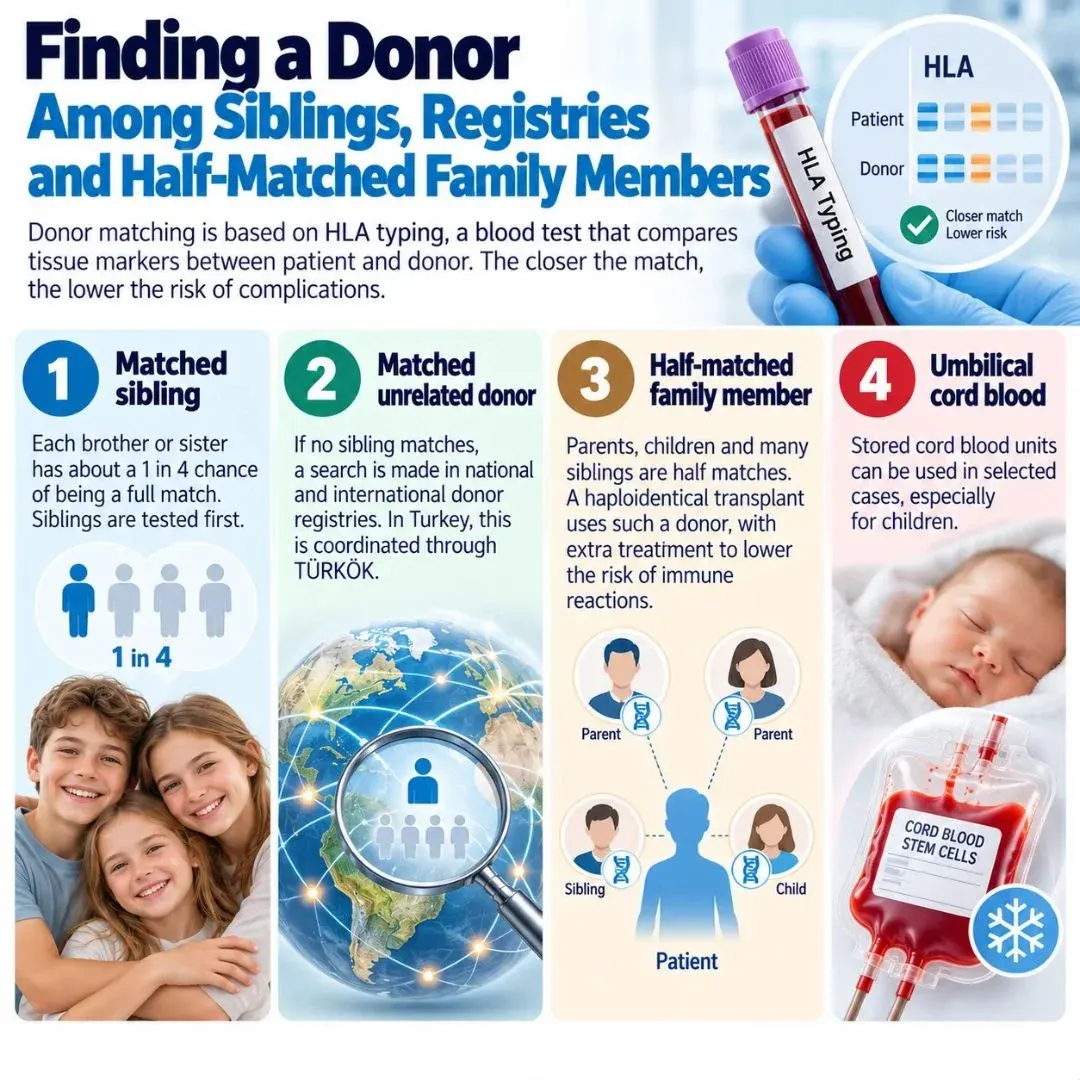
There are four main stem cell transplant donor options:
- Matched sibling. Each brother or sister has about a one in four chance of being a full match. Siblings are tested first.
- Matched unrelated donor. If no sibling matches, a search is made in national and international donor registries. In Turkey, this search is coordinated through the national registry, TÜRKÖK.
- Half-matched family member. Parents, children and many siblings are half matches. A haploidentical transplant uses such a donor, with an extra round of chemotherapy after the transplant to lower the risk of immune reactions. This option has made transplants possible for many patients without a full match.
- Umbilical cord blood. Stored cord blood units can be used in selected cases, especially for children.
If a family member may be a donor, our coordinators can arrange for their tissue typing to be assessed together with your reports.
Diseases usually treated with each type
The choice between autologous vs allogeneic depends mainly on the disease and how likely it is to return.
| Autologous transplant | Allogeneic transplant |
|---|---|
| Multiple myeloma | Acute myeloid leukaemia |
| Relapsed Hodgkin lymphoma | Acute lymphoblastic leukaemia |
| Relapsed non-Hodgkin lymphoma | Myelodysplastic syndromes |
| Some childhood solid tumours | Severe aplastic anaemia |
| Some germ cell tumours | Thalassaemia major, sickle cell disease |
| Myelofibrosis, inherited immune deficiencies |
In simple terms, an autologous stem cell transplant is used when the disease responds to high-dose chemotherapy. An allogeneic stem cell transplant is used when the bone marrow itself is diseased or failing, or when the donor's immune effect is needed to control the disease.
Age, general health, disease stage and donor availability also shape the decision. Our hematology and internal medicine page explains how these conditions are evaluated.
If you would like to know whether this treatment is suitable for you, you can share your medical reports with our patient coordinators, and they will arrange an evaluation with a specialist at one of our partner hospitals.
Differences in hospital stay and recovery
| Autologous | Allogeneic | |
|---|---|---|
| Hospital stay | Often around 2–4 weeks | Often around 4–6 weeks |
| Stay near the centre | Usually several weeks | Usually around 100 days |
| Immune-suppressing medicines | Not needed | Usually needed for months |
| Full recovery | Often several months | Often 6–12 months or longer |
After an autologous bone marrow transplant, blood counts usually recover within two to three weeks. Many patients return home relatively soon after discharge.
After an allogeneic transplant, the first 100 days are the most closely monitored period. Patients take medicines that calm the donor's immune cells, and they need frequent check-ups. Our article on how a bone marrow transplant is performed in Turkey describes each stage of the stay in detail.
Graft Versus Host Disease and Why It Only Affects Donor Transplants
Graft versus host disease (GVHD) happens when the donor's immune cells see the patient's body as foreign and attack it. Since an autologous transplant uses your own cells, there is no foreign immune system and no GVHD.
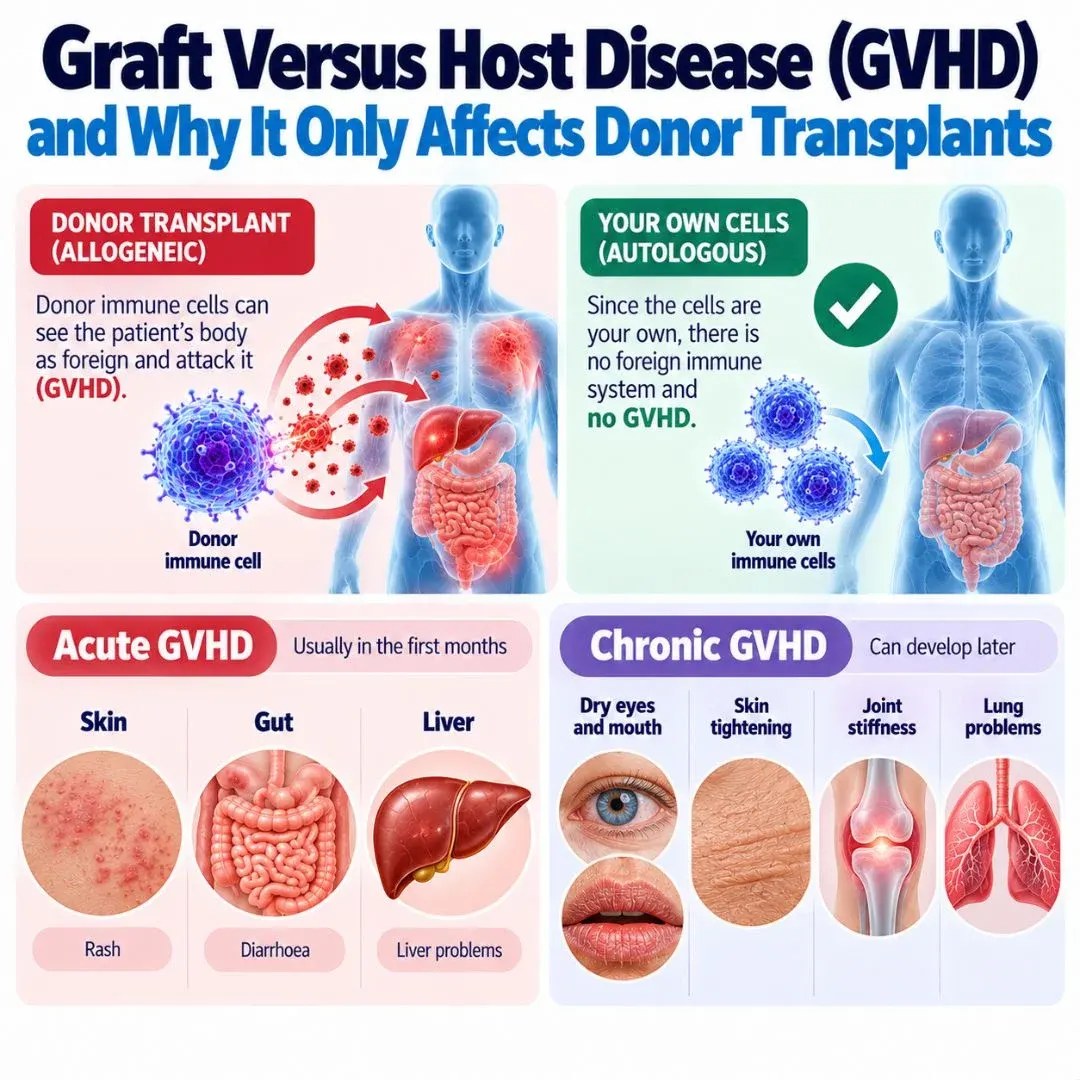
GVHD comes in two forms:
- Acute GVHD usually appears in the first months. It mainly affects the skin (rash), the gut (diarrhoea) and the liver.
- Chronic GVHD can develop later. It may cause dry eyes and mouth, skin tightening, joint stiffness or lung problems.
Many cases are mild and respond to treatment. Severe GVHD, however, is one of the main risks of an allogeneic stem cell transplant. Careful donor matching and preventive medicines reduce this risk.
The same immune activity that causes GVHD also creates the graft-versus-leukaemia effect. Transplant teams try to balance the two.
Survival Figures and How to Read Them
Patients often search for a stem cell transplant survival rate. These figures can help, but only when you know what they describe.
Some recent data:
- A 2025 report from the Center for International Blood and Marrow Transplant Research (CIBMTR), covering first transplants in the United States between 2013 and 2023, found that three-year overall survival after allogeneic transplants continues to improve significantly, reaching about 62% in the most recent period analysed.
- A 2023 single-centre study of 900 patients with AML and MDS who had allogeneic transplants found that five-year overall survival rose from 17% to 53% between 1984 and 2018.
These are figures from published studies, not results of any individual hospital.
When reading survival figures, keep in mind:
- The disease matters most. Outcomes differ widely between, for example, myeloma and acute leukaemia.
- Disease status at transplant. Patients in remission usually do better than those with active disease.
- The time frame. One-year, three-year and five-year figures mean different things.
- The year of data. Results improve over time, so older studies may underestimate today's outcomes.
Your hematologist can tell you which figures apply to your situation.
Frequently Asked Questions
Is an autologous or allogeneic stem cell transplant better?
Neither is better in general. The right choice depends on the disease, its stage and the patient's health. An autologous transplant is safer, while an allogeneic transplant offers the donor's immune effect against the disease.
Can I have both types of transplant?
Yes, in some situations. For example, a patient with myeloma or lymphoma may have an allogeneic transplant if the disease returns after an autologous transplant.
What if I have no matched donor?
A haploidentical transplant from a half-matched family member, or cord blood, can be an option. Many centres now use these donors regularly.
Does GVHD happen after every donor transplant?
No. Some patients develop mild GVHD, some develop more serious forms, and some none at all. The team monitors for it closely and treats it early.
How long do I need to stay in Turkey for each type?
Usually several weeks for an autologous transplant and around three months for an allogeneic transplant. Your treating team will confirm the timeline.
What is the cost of each type of transplant?
The cost varies depending on the condition, the type of treatment and the length of stay. For personalised information, you can contact our patient coordinator.
Choosing between an autologous and allogeneic stem cell transplant is a medical decision, but understanding the reasons behind it helps you ask better questions. If you would like to know whether this treatment is suitable for you, you can share your medical reports with our patient coordinators, and they will arrange an evaluation with a specialist at one of our partner hospitals. You can reach us by phone or WhatsApp at +90 850 259 5553.
Medical disclaimer: This article is for general information only. It does not replace a medical examination, diagnosis or treatment plan by a qualified doctor.
References
- CIBMTR. Current Activity Trends and Outcomes in Hematopoietic Cell Transplantation and Cellular Therapy, a Report from the CIBMTR. Transplantation and Cellular Therapy, 2025.
- Improvement in survival of acute myeloid leukemia and myelodysplastic syndrome patients following allogeneic transplant, a long-term institutional experience.
- National Cancer Institute. Stem Cell Transplants in Cancer Treatment.
- NHS. Stem cell and bone marrow transplants.
- CIBMTR. Summary Slides and Reports