
How a Bone Marrow Transplant Is Performed in Turkey From Evaluation to Recovery
How a bone marrow transplant is performed in Turkey, from tests and stem cell collection to engraftment, recovery and how long international patients stay.
When a hematologist first mentions a bone marrow transplant, most families have the same two questions. What exactly will happen? And how long will we need to be away from home?
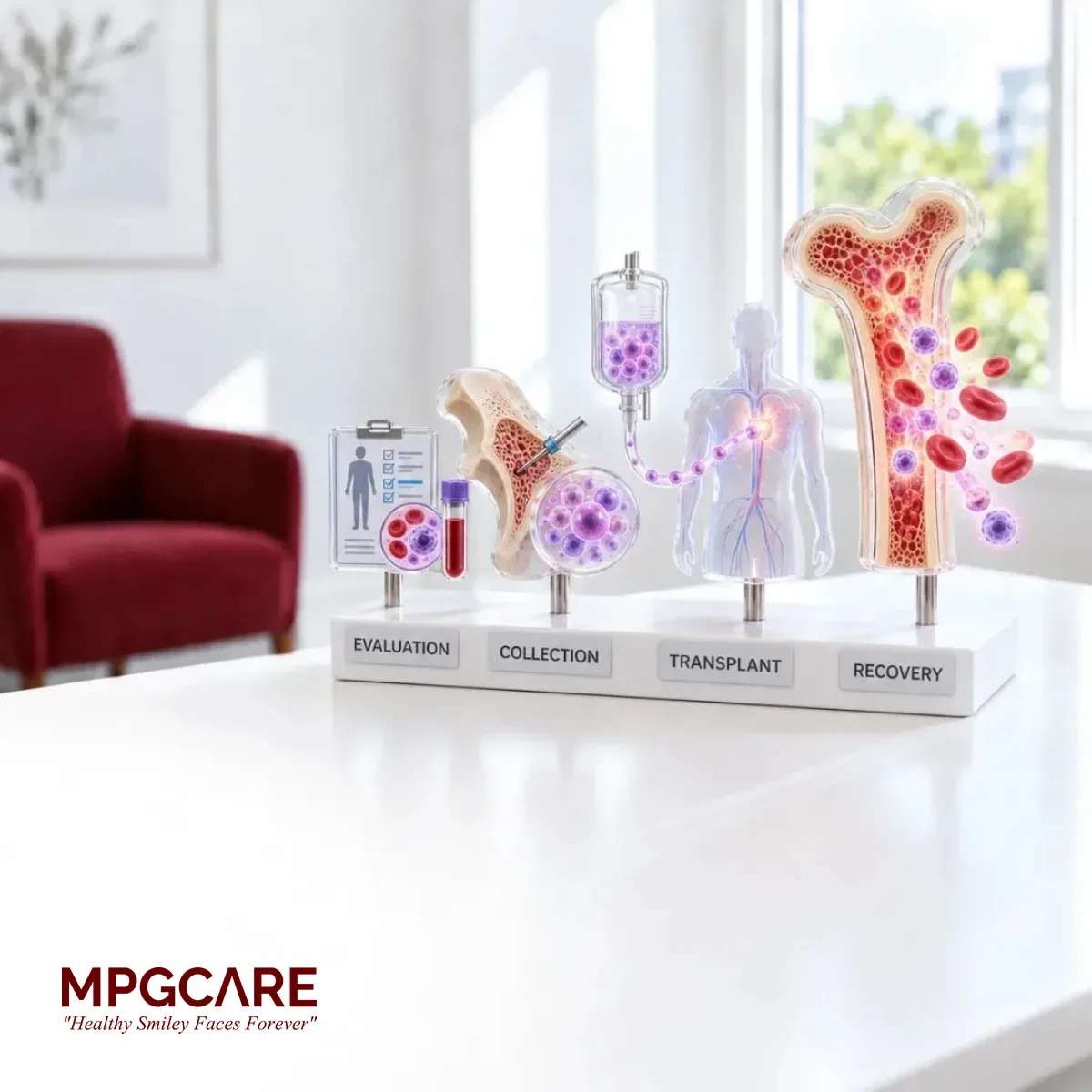
Our patient coordinators hear these questions almost every week from patients considering a bone marrow transplant in Turkey. This guide walks through the full bone marrow transplant procedure, from the first evaluation to the weeks of recovery. If you want the wider picture first, our main guide, Stem Cell Therapy Explained and How the Treatment Is Applied Step by Step, explains the different types of stem cell treatment.
A quick note on terms. A bone marrow transplant and a stem cell transplant mean the same treatment today. Doctors replace damaged blood-forming cells with healthy stem cells, which are now usually collected from the blood rather than the bone.
Who Needs a Bone Marrow Transplant
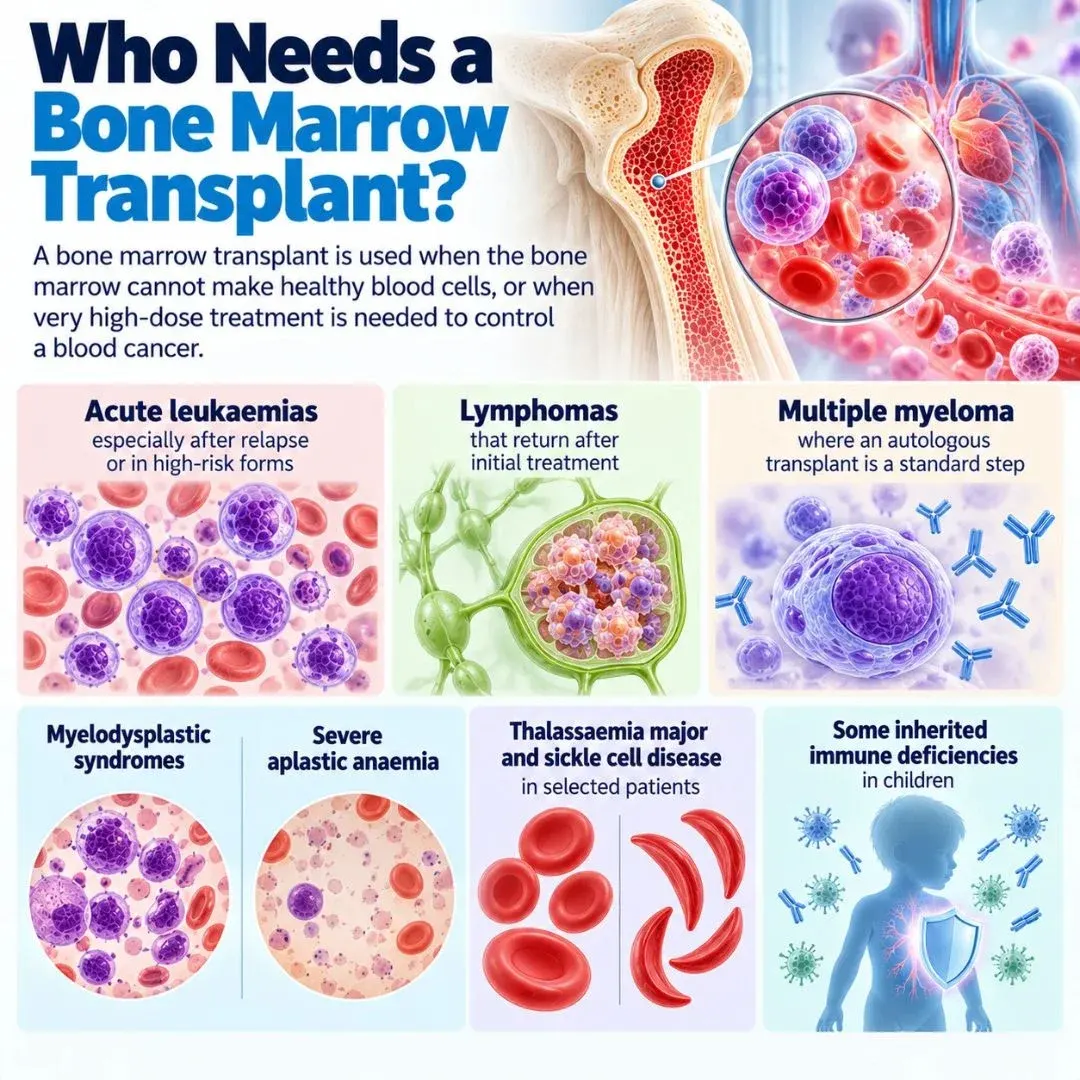
A bone marrow transplant is used when the bone marrow cannot make healthy blood cells, or when very high-dose treatment is needed to control a blood cancer.
Common reasons include:
- Acute leukaemias, especially after relapse or in high-risk forms
- Lymphomas that return after initial treatment
- Multiple myeloma, where an autologous transplant is a standard step
- Myelodysplastic syndromes and severe aplastic anaemia
- Thalassaemia major and sickle cell disease in selected patients
- Some inherited immune deficiencies in children
There are two main types. In an autologous transplant, your own stem cells are collected and returned. In an allogeneic transplant, cells come from a donor, usually a matched sibling or an unrelated volunteer.
Whether you need a transplant, and which type, depends on your diagnosis, disease stage, age and general health. Our hematology and internal medicine page explains how these conditions are evaluated.
Tests and Evaluation Before The Transplant
Before any stem cell transplant, the team needs to know that your body can handle the treatment.
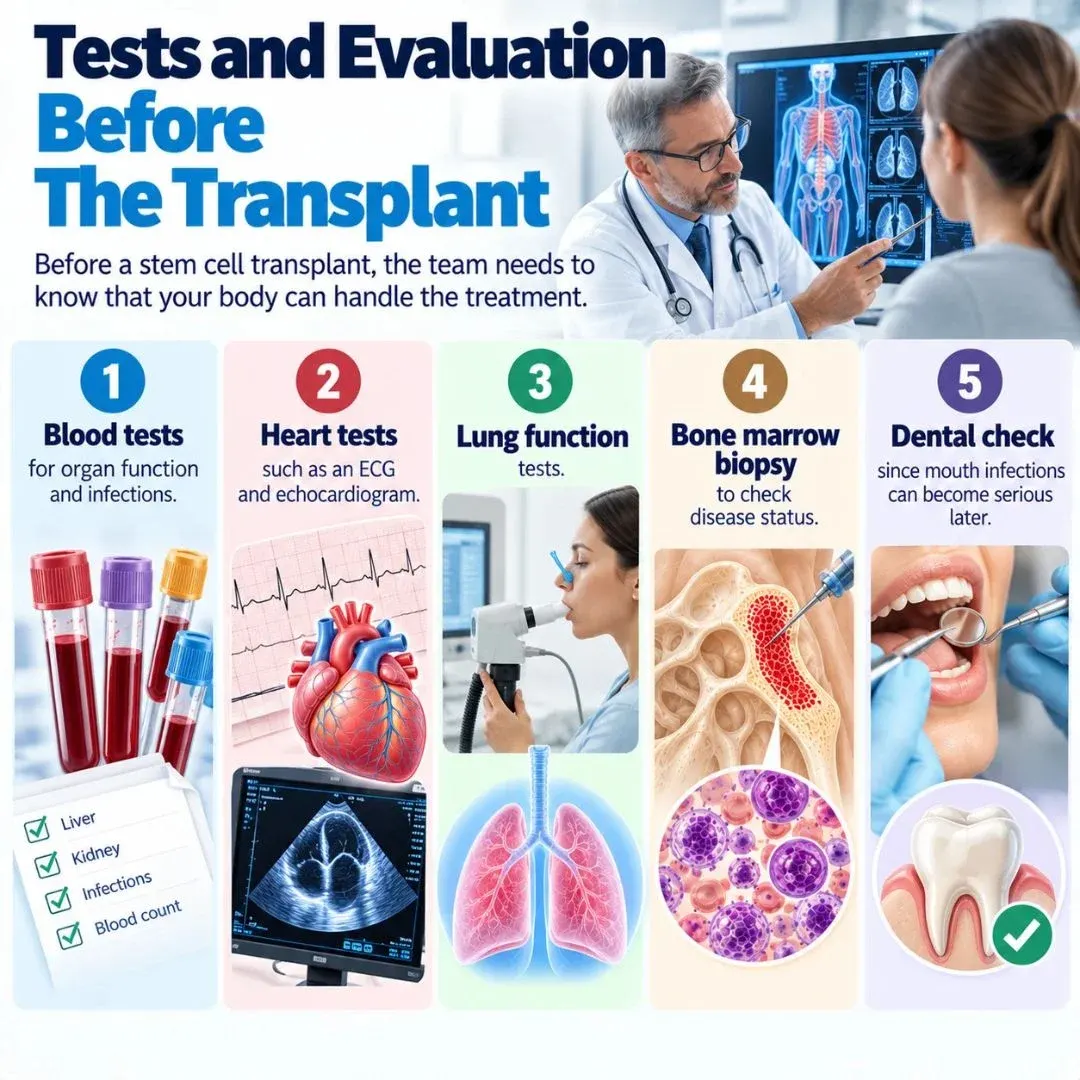
The work-up usually includes:
- Blood tests for organ function and infections
- Heart tests such as an ECG and echocardiogram
- Lung function tests
- A bone marrow biopsy to check disease status
- Dental check, since mouth infections can become serious later
For allogeneic transplants, HLA matching (tissue typing) finds the most suitable donor. Brothers and sisters are tested first. If there is no family match, a search can be made through donor registries. In Turkey, the national stem cell coordination centre, TÜRKÖK, was established by the Ministry of Health on 1 April 2015 for patients who need a hematopoietic stem cell transplant.
A thin central venous catheter is usually placed in a large vein in the chest. It is used for medicines, blood draws and the transplant itself.
If you would like to know whether this treatment is suitable for you, you can share your medical reports with our patient coordinators, and they will arrange an evaluation with a specialist at one of our partner hospitals.
Collecting The Stem Cells With Apheresis or Bone Marrow Harvest
Stem cells can be collected in two ways.
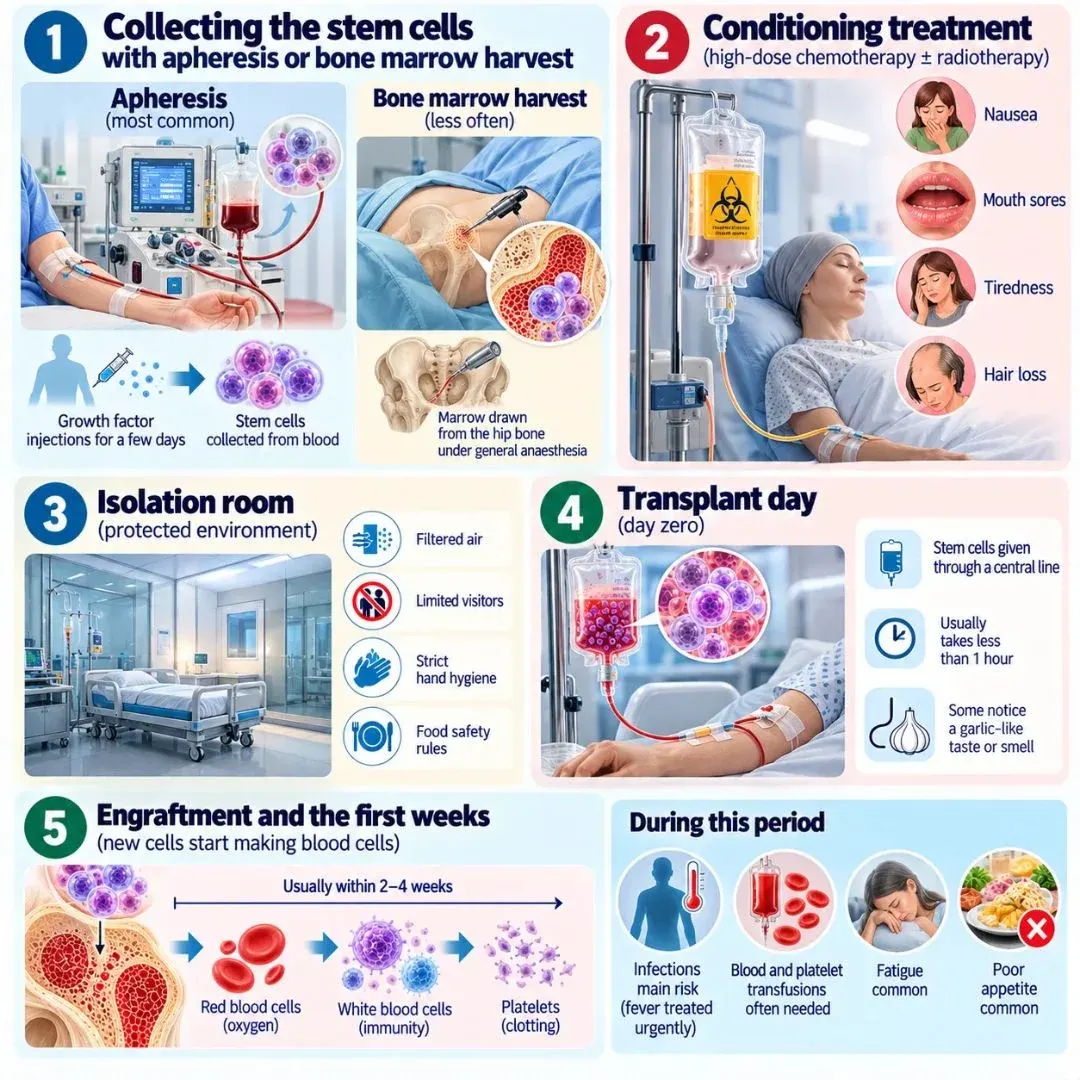
Apheresis is the most common method. For several days, you or your donor receive growth factor injections that move stem cells from the bone marrow into the blood. A machine then filters the stem cells from the blood and returns the rest. It feels much like a long blood donation and usually takes a few hours.
Bone marrow harvest is used less often. Under general anaesthesia, marrow is drawn from the back of the hip bones with a needle. There is no surgical cut, but the area may feel sore for a few days.
For autologous transplants, the cells are frozen and stored until they are needed.
Conditioning treatment and the isolation room
Conditioning is the high-dose chemotherapy, sometimes combined with radiotherapy, given in the days before the transplant. It clears diseased cells and makes space in the bone marrow for the new cells.
For most patients, this is the hardest part of the bone marrow transplant. Nausea, mouth sores, tiredness and hair loss are common.
Because conditioning weakens the immune system, patients stay in a protected room with filtered air. Visitors are limited, hand hygiene is strict, and meals follow food safety rules. Families are often surprised by how calm and organised these units feel.
Transplant day and what it feels like
Transplant day is often called day zero. The stem cells are given through your central line, much like a blood transfusion. It is not surgery, and it usually takes less than an hour.
Many patients describe the day as quieter than they expected. Some notice a garlic-like taste or smell from the preservative used for frozen cells. Nurses check your vital signs closely during and after the infusion.
The first weeks while the new cells engraft
After the infusion, the new cells travel to the bone marrow and start making blood cells. This is called engraftment, and it usually happens within two to four weeks.
Until then, blood counts are very low. During this period:
- Infections are the main risk, so fever is treated urgently
- Blood and platelet transfusions are often needed
- Fatigue and poor appetite are common
After a donor transplant, the team also watches for graft-versus-host disease, when donor immune cells attack the patient's skin, gut or liver. It can range from mild to serious and needs close follow-up.
Patients usually leave hospital once blood counts recover and they can eat and drink well.
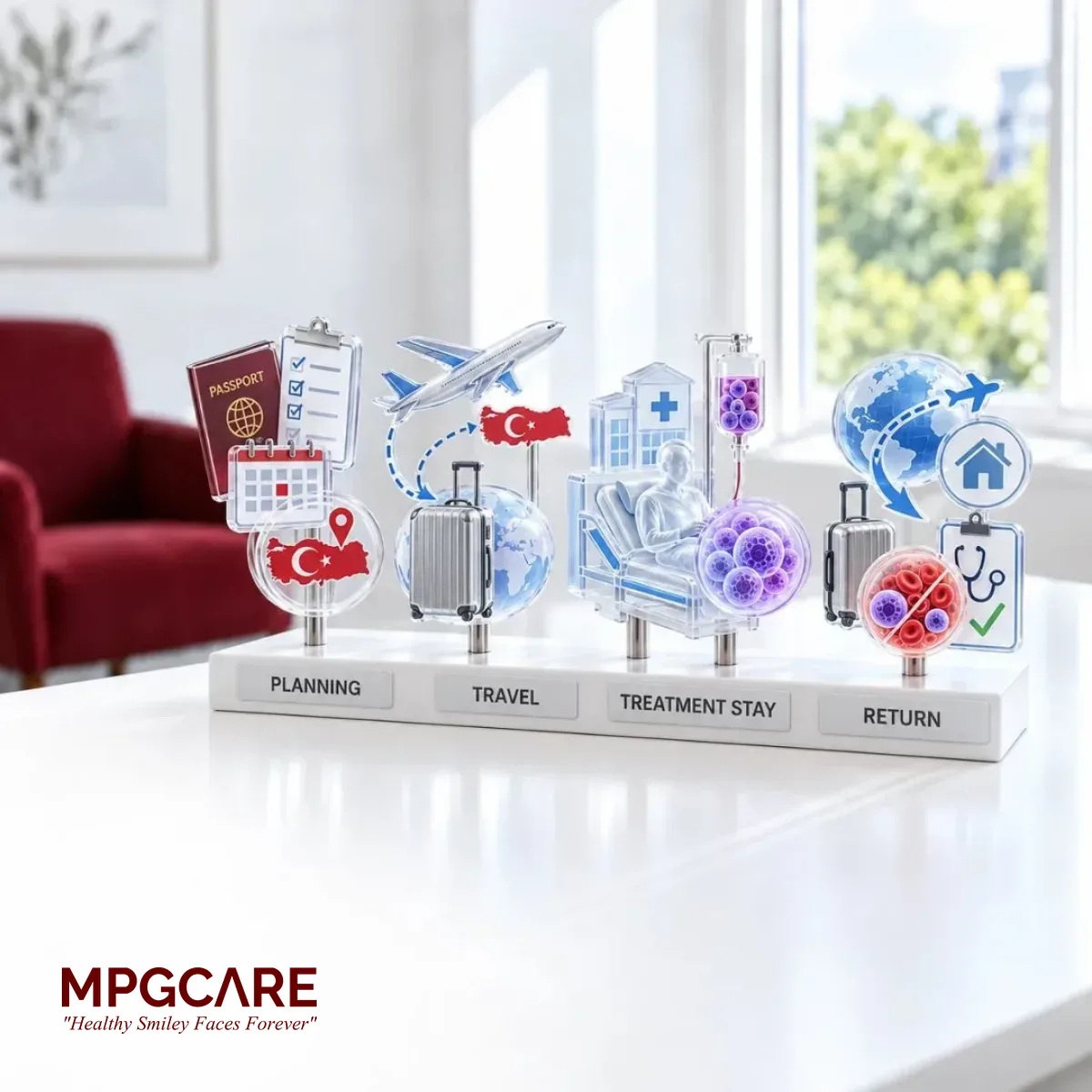
How Long International Patients Usually Stay
Planning the stay is one of the most practical questions for families travelling for a bone marrow transplant in Turkey.
| Transplant type | Typical stay in Turkey |
|---|---|
| Autologous | Often around 4–6 weeks |
| Allogeneic | Often around 3 months near the hospital |
The first 100 days after an allogeneic transplant are the most closely monitored period, which is why staying near the transplant centre matters. Bone marrow transplant recovery continues at home for months, with energy and immunity returning gradually.
Your treating team will confirm the exact timeline based on your recovery.
Licensed transplant units and what the Ministry of Health requires
In Turkey, bone marrow transplants are not offered by every hospital. Under social security health rules, a hematopoietic stem cell transplant is performed in bone marrow transplant centres licensed and authorised by the Ministry of Health.
Centres handling human cells and tissues must also hold the licence and activity permit required by national regulations.
When choosing where to have a stem cell transplant in Turkey, it is reasonable to ask:
- Is the transplant unit licensed by the Ministry of Health?
- How many transplants of my type does the team perform each year?
- Does the centre have its own HLA laboratory and protected rooms?
- Who will follow me after I return home?
How to Arrange a Consultation With a Hematologist
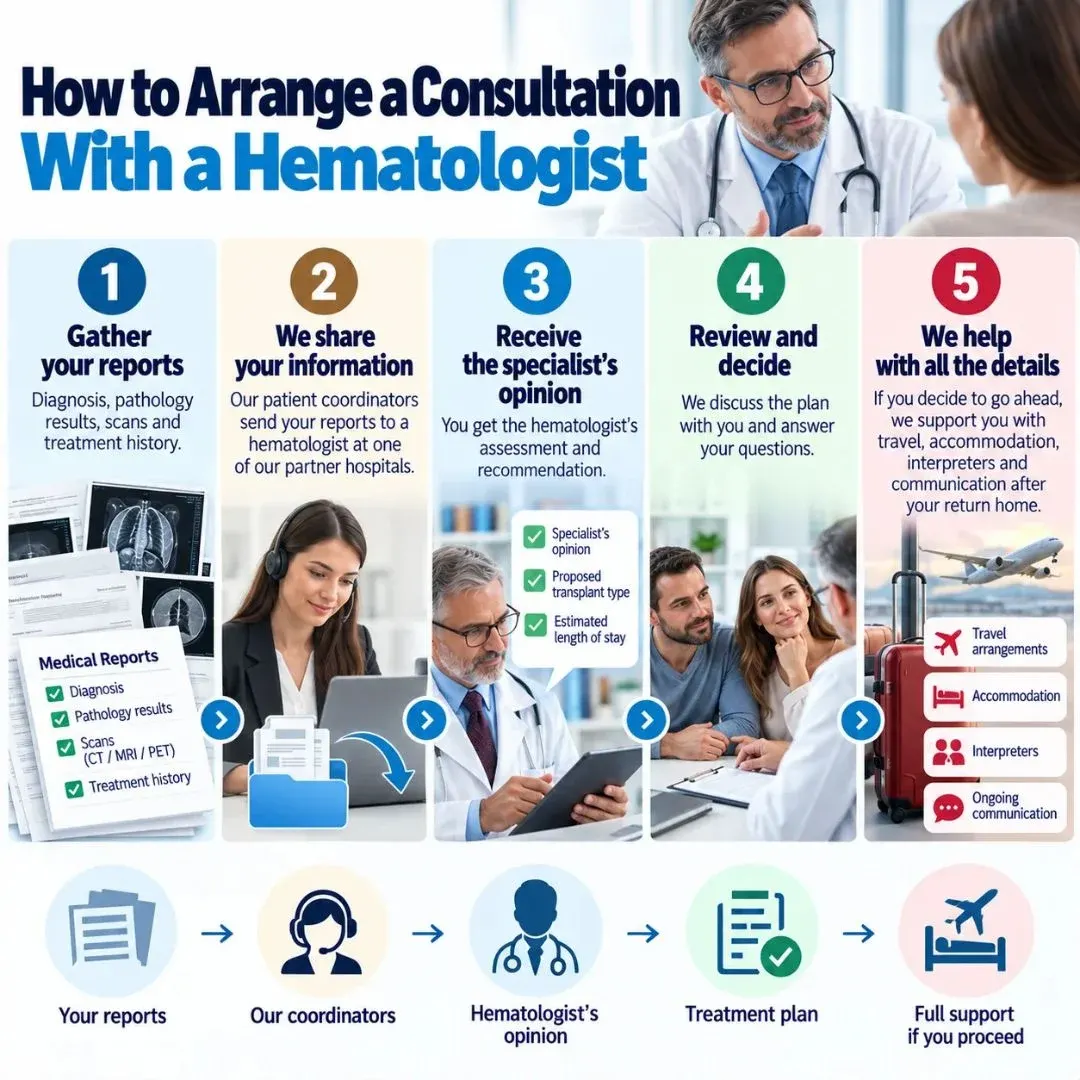
The first step is simple. Gather your recent reports, including your diagnosis, pathology results, scans and treatment history.
Our patient coordinators share these with a hematologist at one of our partner hospitals. You receive the specialist's opinion, the proposed transplant type and an estimated length of stay. If you decide to go ahead, we help with travel, accommodation, interpreters and communication after you return home.
Frequently Asked Questions
Is a bone marrow transplant painful?
The transplant itself is not painful. Discomfort mainly comes from the side effects of conditioning, such as mouth sores and nausea, which the team manages with medicine and supportive care.
What is the difference between a bone marrow transplant and a stem cell transplant?
Today they usually mean the same treatment. The term "stem cell transplant" is more accurate because cells are mostly collected from the blood, not the bone marrow.
Can a family member be my donor?
Yes, if their HLA type matches. Siblings have the highest chance of being a full match. Parents and children are usually half matches, which some centres can also use.
How long does bone marrow transplant recovery take?
Most patients leave hospital within a few weeks. Full recovery of energy and immunity often takes six months to a year, especially after a donor transplant.
Can I fly home after the transplant?
Yes, once your team confirms your blood counts and overall condition are stable. Timing depends on the transplant type and how recovery goes.
What is the cost of a bone marrow transplant in Turkey?
The cost varies depending on the condition, the type of treatment and the length of stay. For personalised information, you can contact our patient coordinator.
A bone marrow transplant is a long journey, but it becomes much easier to face when each stage is clear in advance. If you would like to know whether this treatment is suitable for you, you can share your medical reports with our patient coordinators, and they will arrange an evaluation with a specialist at one of our partner hospitals. You can reach us by phone or WhatsApp at +90 850 259 5553.
Medical disclaimer: This article is for general information only. It does not replace a medical examination, diagnosis or treatment plan by a qualified doctor.
References
- National Cancer Institute. Stem Cell Transplants in Cancer Treatment.
- NHS. Stem cell and bone marrow transplants.
- Social Security Institution of Türkiye. Health Implementation Communiqué (SUT), bone marrow transplantation provisions.
- Republic of Türkiye Ministry of Health. Regulation on the Quality and Safety of Human Tissues and Cells and Related Centres.
- Çukurova University. Adult Bone Marrow / Stem Cell Transplant Centre, information on TÜRKÖK.